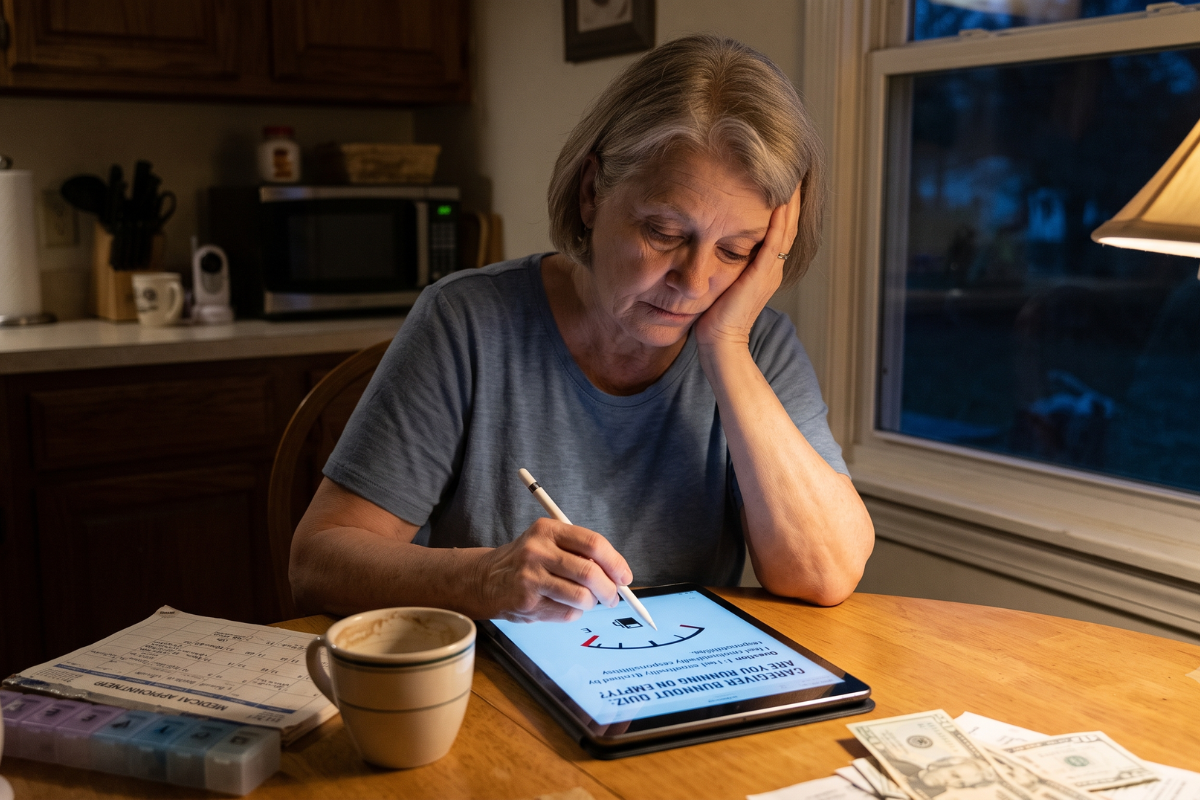
Taking care of someone else is hard work, and it's easy to lose track of how much it's wearing you down. This caregiver burnout quiz gives you a way to check in with yourself honestly, using questions built around real clinical research, so you know where you stand and what kind of help might make a difference.
Key Takeaways
- Caregiver burnout is a state of physical, emotional, and mental exhaustion caused by prolonged caregiving stress.
- Warning signs include persistent fatigue, social withdrawal, resentment, and feelings of hopelessness.
- A caregiver burnout quiz helps you honestly assess your stress level in just a few minutes.
- Scoring your results gives you a clearer picture of whether you need immediate support or preventive care.
- Many caregivers don't recognize burnout until it affects their own health and ability to care for others.
- EAAAA offers free and low-cost caregiver support services across Northeast Arkansas.
- Getting help early protects both you and the person you care for.
Jump to a section:
- Take the Caregiver Burnout Quiz
- What Is Caregiver Burnout?
- What Are the Warning Signs of Caregiver Burnout?
- How to Score Your Caregiver Burnout Quiz
- What Can You Do If You're Experiencing Caregiver Burnout?
- How Does EAAAA Support Caregivers in Northeast Arkansas?
- Frequently Asked Questions
What Is Caregiver Burnout?
Caregiver burnout isn't just exhaustion. It's what happens when you've been running on empty for so long that even rest stops feeling like enough.
Most caregivers know tired. You know what it's like to stay up late, skip meals, push through. But burnout is different. It builds quietly, over months or years of putting someone else's needs ahead of your own, often without a real break or anyone asking how you're doing.
The scope of this is bigger than most people realize. AARP's 2025 caregiving research found that approximately 63 million Americans are providing unpaid care to a family member or friend. Of those caregivers, 20 percent say their own health has declined because of it. That's not weakness. That's what prolonged caregiving without enough support actually does to a person.
It reaches people in every kind of situation, adult children managing a parent's care, spouses navigating a partner's chronic illness, grandparents raising grandchildren full-time. The common thread is sustained stress without relief. The longer it goes without being named and addressed, the harder it gets to recover.
Recognizing burnout for what it is, not just writing it off as a rough patch, is where things can start to shift. The warning signs are worth knowing, and that's exactly what's next.
What Are the Warning Signs of Caregiver Burnout?
Burnout doesn't arrive all at once. It tends to sneak in slowly, which makes it easy to brush off or explain away until things are already pretty hard.
Physical Warning Signs
Your body often picks up on it before your mind does. You can tell yourself you're fine. Your body isn't so easy to convince.
Watch for fatigue that doesn't go away after rest, getting sick more often than usual, and sleep that's all over the place. Maybe you can't fall asleep. Maybe you can't get out of bed. Weight changes, appetite shifts, and that constant tension in your neck or shoulders are all part of the picture too.
None of that is weakness. It's your nervous system telling you it's been carrying too much for too long.
Emotional and Mental Warning Signs
The emotional signs can be harder to say out loud. According to the Mayo Clinic, caregivers often experience resentment toward the person they're caring for, withdrawal from friends and family, a sense of being trapped, ongoing anxiety or depression, and a loss of interest in things they used to love.
Resentment is worth pausing on. Feeling it doesn't make you a bad caregiver. It makes you a person under real, sustained pressure. These feelings are signals. Something needs to change, and that's not something to be ashamed of.
You don't have to figure out what that something is alone. EAAAA's caregiver services program was built specifically for family caregivers across Northeast Arkansas, with support that meets you where you are.
If several of these feel familiar, the quiz below can help you get a clearer picture of where you're at right now.
Take the Caregiver Burnout Quiz
This quiz isn't a medical diagnosis. It's a simple way to see what exhaustion may be making it hard to notice on your own.
The questions are adapted from validated tools used by healthcare professionals, including the Zarit Burden Interview, one of the most widely used caregiver stress assessments in clinical practice. If your score is high, please talk with your doctor or a mental health professional. You deserve real support, not just a number on a page.
Score each question using this scale:
- 0 = Never
- 1 = Rarely
- 2 = Sometimes
- 3 = Often
- 4 = Always
- I feel emotionally drained by my caregiving responsibilities.
- I feel resentful or bitter about the caregiving role I'm in.
- I skip my own doctor appointments, meals, or sleep because caregiving takes priority.
- I feel trapped in my caregiving situation with no way out.
- I've pulled back from friends, family, or activities I used to enjoy.
- The demands of caregiving feel like more than I can handle.
- I have trouble sleeping because of caregiving worries or responsibilities.
- I've lost my sense of humor or my ability to enjoy everyday life.
- My own physical health has gotten worse since I became a caregiver.
- I feel like asking for help is a sign of weakness or failure.
Add up your answers. Your total will fall somewhere between 0 and 40.
Your score is a starting point, not a verdict. Keep reading to find out what it means and what you can do next.
How to Score Your Caregiver Burnout Quiz
Your score pulls from four areas: physical exhaustion, emotional strain, social isolation, and how much say you have in your own daily life. The higher the score, the more you're carrying. That's worth knowing.
0–14: Low Stress
Right now, you're in a steadier place. That matters more than it sounds. Caregiving is a long road, and the calmer stretches deserve to be protected. Keep doing what's working. Stay honest with yourself about where your edges are. Check back in if things start to shift.
15–24: Moderate Burnout Risk
Something is wearing on you, and your score reflects it. These numbers don't show up for no reason. Now is the time to pay attention, not six months from now when you're running on empty. Talk to someone you trust. Look into respite care options. Ask for help while asking still feels possible.
25–40: High Burnout Risk
This score is saying something you need to hear. A lot of caregivers who land here feel like needing a break means they're letting someone down. It doesn't. Taking care of yourself is how you stay in this. It's how you keep showing up for the person you love.
According to AARP's 2025 caregiving research, 44% of family caregivers provide high-intensity care, and 20% say their own health has suffered as a result. If your score landed in the moderate or high range, you're not alone. Real support is out there, and the next section covers the most practical steps you can take today.
What Can You Do If You're Experiencing Caregiver Burnout?
You don't have to wait until you're completely depleted to ask for help. If you're already feeling worn down, that's your sign. Real support exists for this, including resources close to home in Northeast Arkansas.
1. Seek Respite Care
A few hours away isn't a luxury. It's how you keep going. Respite care brings in a qualified person to cover for you so you can step back, breathe, and reset. The Lifespan Respite Care Program through the Administration for Community Living is a good place to start. It can help you understand what's available at the federal level and point you toward local options.
2. Talk to a Care Coordinator
You don't need to have a plan figured out before you make the call. That's what the call is for. EAAAA's care coordinators offer a free service for eligible families, and their job is to help you build the plan together. You don't have to walk in with answers.
3. Find a Support Group
Other caregivers get it in a way most people don't. The 2 a.m. worry. The guilt that hits when you lose your patience. The strange loneliness of doing something so hard so quietly. EAAAA's wellness programs include group resources built for people in exactly this role. Sometimes just being in a room with people who understand makes a real difference.
4. Protect One Thing for Yourself
Pick one thing. A walk. A phone call with a friend. A full night of sleep. Then treat it like it's non-negotiable, because it is. This isn't about self-care as an abstract idea. It's about staying functional so you can keep showing up for the person who needs you.
The next section covers the specific services EAAAA provides and how to connect with them directly.
How Does EAAAA Support Caregivers in Northeast Arkansas?
EAAAA has been working alongside families in Northeast Arkansas for decades. The programs here weren't designed in a boardroom. They were shaped by what caregivers in these 12 counties kept asking for, year after year.
Caregiver Services Program
When you've been the only one showing up for months, you stop thinking about what you need. The caregiver services program is built for that moment. Families connect with respite care, supplemental support, and people who actually understand what caregiving does to a person. If you can't remember the last time you slept through the night, this is where to start.
Care Coordination
You know things need to change. You just don't know what to do first. Free care coordination pairs you with someone who will sit down with you, assess what your loved one actually needs, and build a plan around your real life. They make the calls, track down the resources, and handle the logistics you don't have bandwidth for right now.
In-Home Care Services
There's nothing that says loving someone means doing everything yourself. EAAAA's home care services bring personal care, homemaker support, and skilled nursing into the home so your parent or spouse has consistent, professional help between your visits. You're still their person. You're just not carrying it all alone.
Serving 12 Counties in Northeast Arkansas
EAAAA's reach covers 12 counties across Northeast Arkansas. If your family is outside that area, the Eldercare Locator is a free national tool that can point you toward local aging services wherever you are.
Frequently Asked Questions
What is the difference between caregiver stress and caregiver burnout?
Stress is the daily weight of it: the medication schedules, the appointments, the 2 a.m. moments where you're lying awake listening for something you can't name. Burnout is what happens when that weight never lifts. It's past tired. It's a kind of hollowness where you keep showing up but feel like you're watching yourself from a distance. Stress can ease when circumstances shift. Burnout usually doesn't move without something real changing first.
Can you recover from caregiver burnout?
You can, but pushing harder isn't how it happens. Recovery tends to come when something actually shifts: regular respite care, an honest conversation with your doctor, or finally letting other people help in the ways you've been politely declining. It's slow, and it rarely happens alone. Most people who come out the other side point to one thing that gave them enough breathing room to start feeling like themselves again.
Is it normal to feel resentful as a caregiver?
Resentment is probably the most common thing caregivers feel and the least talked about. It doesn't mean you love your family member any less. It usually means your own needs have gone unmet for so long that something in you is finally pushing back. That feeling isn't a character flaw. Ignoring it, though, pretending it isn't there, tends to make everything harder.
How do I know when it's time to ask for help with caregiving?
If you've taken a caregiver burnout quiz and scored in the moderate or high range, don't brush past that. You don't have to wait for a crisis to ask for support. When caregiving starts showing up in your sleep, your health, your relationships, or your ability to get through an ordinary day, you already have your answer.
You Don't Have to Do This Alone
Burnout doesn't mean you failed. It means you've been carrying something heavy, probably for longer than you should have had to carry it alone. If you took the caregiver burnout quiz and felt a little too seen by the results, that's not weakness. That's what happens when someone gives and gives without enough support coming back their way.
EAAAA has been working alongside families in Northeast Arkansas for more than 40 years. If you need someone to talk through your options, a few hours of respite each week, or help thinking through a longer-term care plan, there are real people here who've heard it before and know how to help.
Call 800-467-3278 or contact EAAAA online. They're available Monday through Friday, 8 a.m. to 5 p.m. You don't have to figure this out alone.